You pull into the driveway after work, and you barely notice it anymore. The concrete has slowly gone from light grey to a patchy, darkened surface with green streaks along the edges and a few dark oil spots near where the truck parks. It happened so gradually that it just feels normal now.
Here's the problem: what you've stopped seeing is actively costing you money. Dirty concrete isn't just a cosmetic issue. It's a slow, compounding problem that affects safety, property value, surface longevity, and even your relationship with your HOA. And by the time most homeowners realize it, the cost of fixing it has multiplied.
Let's break down what dirty concrete actually costs you — and why addressing it early is one of the smartest maintenance investments you can make.
Cost #1: Surface Deterioration and Reduced Lifespan
Concrete is tough, but it's not invincible — and it's porous. That porosity is the root of the problem.
When algae, mildew, dirt, and oil sit on concrete for months or years, they don't just sit there. They actively degrade the surface:
Algae and Moisture
Algae colonizes the pores of concrete and holds moisture against the surface continuously. In North Texas, where we get freeze-thaw cycles in winter and intense heat in summer, that trapped moisture expands and contracts inside the concrete's micro-structure. Over time, this causes micro-cracking, surface spalling, and pitting. The smooth, bright surface gradually becomes rough, pitted, and prone to faster staining.
Oil and Chemical Penetration
Oil, transmission fluid, and fertilizer stains don't just sit on top of concrete — they soak into it. The longer they penetrate, the deeper they go. Old oil stains that have been sitting for years may never fully come out, even with professional treatment. And the chemical composition of petroleum products can slowly break down the cement paste that binds the concrete together.
The Long-Term Impact
Well-maintained concrete can last 25 to 30+ years. Neglected concrete — where organic growth, oil, and moisture have been allowed to degrade the surface — may need resurfacing or replacement in 15 to 20 years. At $4,000 to $10,000+ for a driveway replacement, that's a significant cost that regular cleaning (a few hundred dollars every year or two) could have prevented.
Cost #2: Slip Hazards and Liability
This is the cost most homeowners completely overlook — and it's the one that can hurt someone.
The Invisible Danger
When algae and mildew colonize a concrete surface, they create a thin, nearly invisible film. On dry concrete, you can't see it or feel it. But when that surface gets wet — from rain, sprinklers, or morning dew — it becomes dangerously slick. Not "a little slippery." Genuinely hazardous.
This isn't speculation. Slip-and-fall injuries on algae-covered walkways are a well-documented safety issue, and they're a particular concern for:
- ▸Older family members and guests — falls are a leading cause of injury for adults over 65
- ▸Children — who run on surfaces without thinking about traction
- ▸Delivery drivers and service workers — who may not expect a slick surface
- ▸Anyone carrying groceries or children — where a slip leads to a fall
The Liability Reality
If someone falls on your property because of a hazardous surface you knew about (or should have known about), you could be held liable. Homeowners insurance may cover some incidents, but repeated claims drive up premiums — and serious injuries can exceed policy limits.
Professional driveway and concrete cleaning removes the organic growth that creates the slick film, restoring the natural traction of the surface. It's one of the few maintenance tasks that directly prevents injuries.
Cost #3: Property Value and Curb Appeal
Whether you're selling now or planning to stay for decades, your property's appearance affects its value. And concrete is one of the first things people see.
First Impressions
Your driveway is the single largest visible concrete surface on your property. It's the first thing visitors, neighbors, and potential buyers see when they arrive. A darkened, stained, algae-covered driveway drags down the appearance of even a well-maintained home. A clean, bright driveway makes the entire property look cared for.
Buyer Perception
When a buyer pulls up to a house and sees a stained, darkened driveway, they immediately form a subconscious impression: this home hasn't been well maintained. That perception extends to everything else — if the driveway looks like this, what about the roof? The HVAC? The plumbing?
Even if your home is in excellent condition, a dirty driveway undermines the first impression that supports your asking price.
Appraisal Impact
While appraisers primarily rely on comparable sales and structural condition, curb appeal does influence perceived condition. A property that looks neglected from the outside can be appraised more conservatively than an identical property that presents well.
Cost #4: HOA Violations and Fines
If you live in a neighborhood with a homeowners association, dirty concrete isn't just an aesthetic issue — it can be a compliance issue.
Common HOA Violations
Many HOA communities in Sherman, Denison, Van Alstyne, and surrounding areas have architectural standards that address exterior maintenance. These standards typically require:
- ▸Driveways and walkways kept in clean, presentable condition
- ▸No visible algae, mildew, or organic staining
- ▸No excessive oil stains or fluid leaks
- ▸Overall property appearance consistent with neighborhood standards
When your driveway develops visible algae growth or dark staining, you may receive a violation notice requiring you to address it within a specified timeframe. If left unaddressed, these notices can escalate to fines, hearings, and liens.
The Prevention Strategy
The simplest way to avoid HOA issues is to stay ahead of the problem. A professional sidewalk and walkway cleaning combined with driveway cleaning every 12 to 18 months keeps your concrete looking presentable and keeps you compliant — without the stress of a violation notice.
Cost #5: The Compounding Effect of Neglect
Here's what makes dirty concrete so insidious: the longer you wait, the more expensive it gets.
Stage 1: Surface Staining (Months 1–12)
Algae, dirt, and pollen begin to colonize the surface. The concrete darkens slightly. A professional clean at this stage is quick, affordable, and restores the surface completely.
Stage 2: Embedded Growth (Months 12–24)
Algae has rooted into the pores of the concrete. Oil stains have penetrated deeper. The surface is noticeably dark and patchy. Cleaning requires more pre-treatment and effort, and some staining may be harder to fully remove.
Stage 3: Surface Degradation (Years 2–4)
Organic growth has been holding moisture against the surface continuously. Micro-cracking and pitting may be visible. Oil stains are deeply set. The concrete looks permanently aged. Cleaning can improve the appearance, but some damage is irreversible.
Stage 4: Structural Issues (Years 4+)
Cracks have widened. Spalling is visible. The surface is rough and deteriorating. At this stage, cleaning helps with appearance, but resurfacing or replacement may be necessary — a cost that runs into the thousands.
The Math: Cleaning vs. Neglect
Let's put real numbers to this:
| Scenario | Cost | |---|---| | Professional driveway cleaning (every 12–18 months) | $150–$400 per cleaning | | Concrete sealant (every 2–3 years) | $200–$500 | | 10-year cost of regular maintenance | ~$1,500–$3,000 | | Concrete resurfacing (if neglected) | $2,000–$5,000 | | Full driveway replacement | $4,000–$10,000+ | | HOA fine (per violation, if applicable) | $50–$500+ | | Slip-and-fall liability claim | Varies — potentially significant |
The math is straightforward: spending a few hundred dollars every year or two prevents costs that run into the thousands — or tens of thousands — down the road.
What Professional Concrete Cleaning Actually Does
Professional cleaning isn't just "blasting with water." It's a process designed to restore and protect:
- ▸Assessment — The surface is inspected for stains, cracks, and the type of growth present
- ▸Pre-treatment — Oil, rust, and organic stains get targeted chemical treatment to break down deep-set contamination
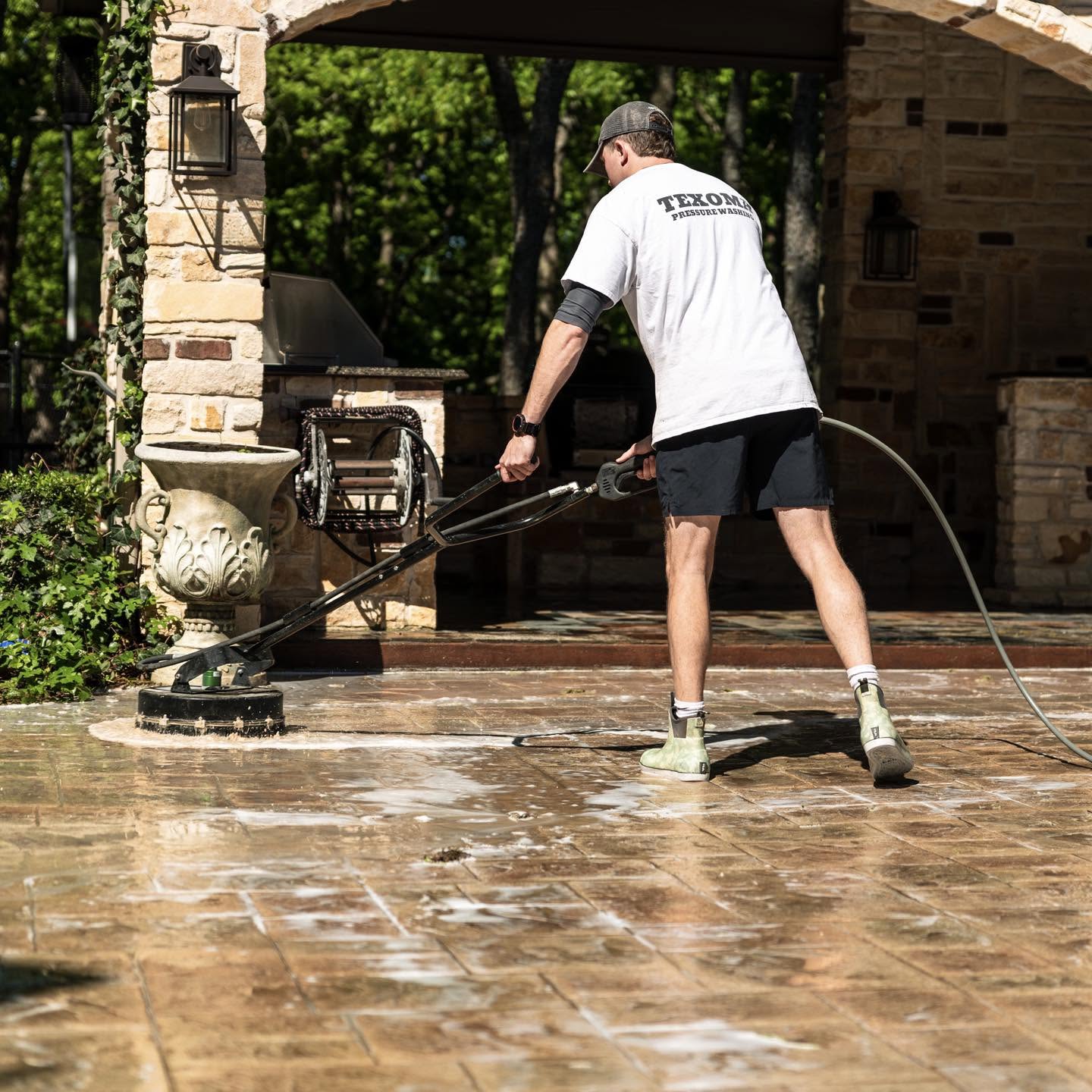
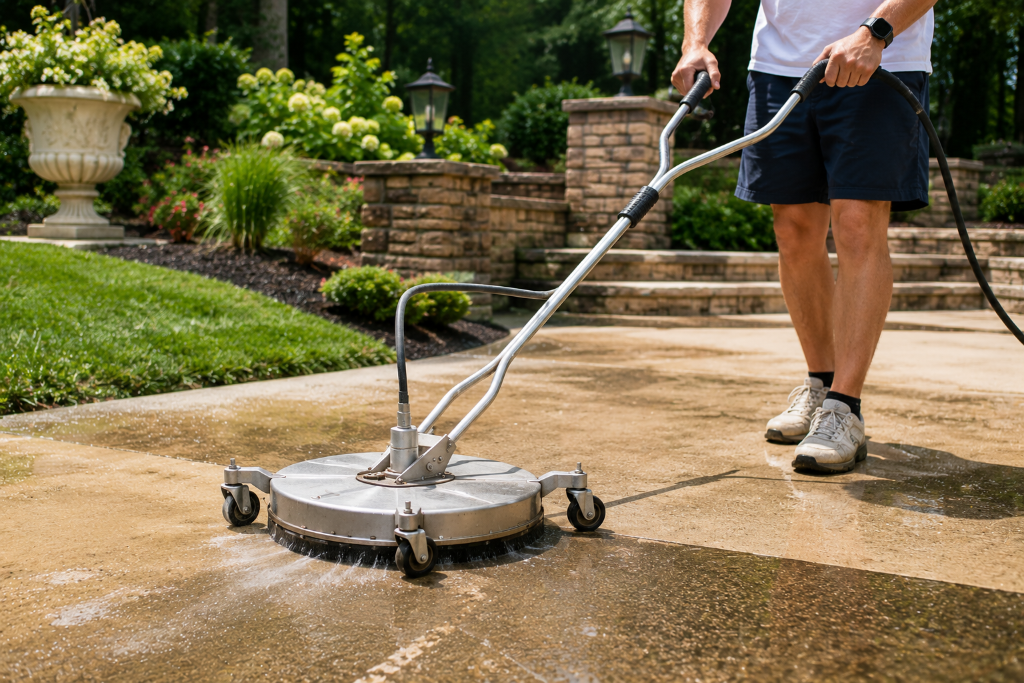
- ▸Surface cleaning — A flat surface cleaner delivers uniform, consistent pressure that lifts staining without etching (no zebra stripes from a handheld wand)
- ▸Edging and detailing — Edges, joints, and corners that the surface cleaner can't reach are hand-cleaned
- ▸Optional sealing — A sealant fills the concrete pores so future stains sit on the surface instead of soaking in
The result is a uniform, bright finish that makes the entire property look better — and a surface that's easier to maintain going forward.
Don't Wait Until It's Permanent
The most expensive thing you can do with dirty concrete is nothing. Every season you wait, the staining gets deeper, the growth gets more established, and the cost of restoration goes up.
If your driveway, walkways, or patio are looking dark, stained, or slick, Texoma Pressure Washing can help. We provide professional driveway and concrete cleaning throughout Sherman, Denison, and the surrounding Texoma area. Request a free quote and let's protect your concrete before the damage becomes permanent.
Frequently Asked Questions
Related Service
Driveway & Concrete Cleaning
Restore the curb appeal of your home with professional driveway and concrete cleaning that erases years of embedded stains.
Learn About This Service